| Scientific Overview |
|
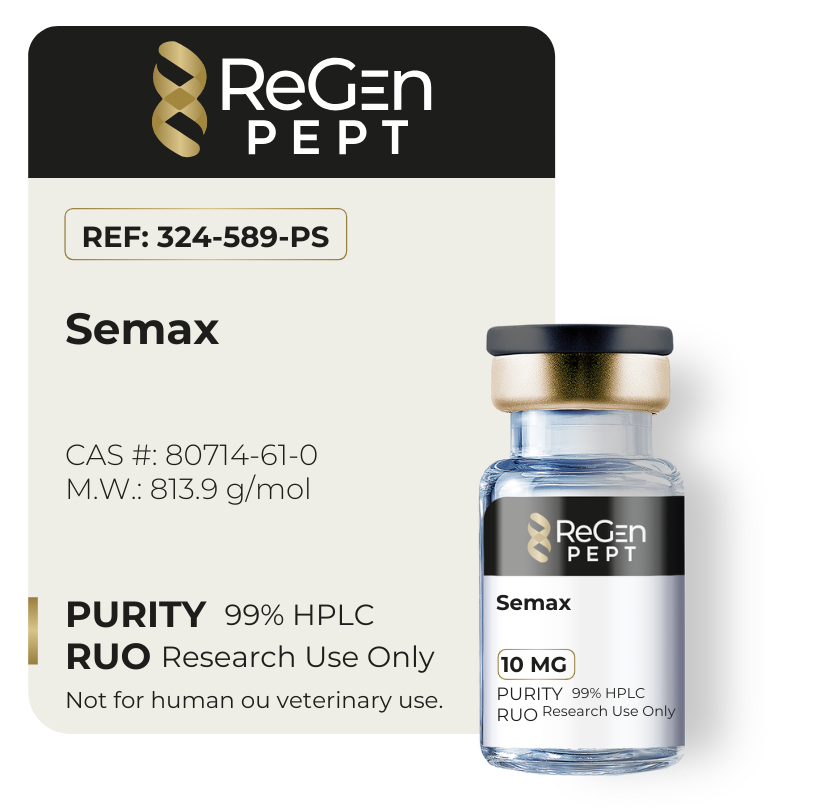
| Semax is a synthetic peptide derived from a fragment of adrenocorticotropic hormone (ACTH 4–10) with an added C-terminal Pro–Gly–Pro sequence to enhance stability. It has been used in certain regions as a neurotrophic and cognitive-support agent and has been studied for its effects on attention, memory, stress resilience, and neuroprotection, particularly in cerebrovascular contexts. Semax is best framed as a neuroactive peptide with neuromodulatory and neurotrophic signaling effects rather than a classic stimulant. |
| Mechanism of Action |
|
| Semax is reported to modulate multiple neurobiological pathways, including: |
|
• Upregulation of neurotrophins (including BDNF and NGF-related signaling)
• Modulation of monoaminergic neurotransmission (dopaminergic/serotonergic tone)
• Anti-inflammatory and antioxidant effects in neural tissue
• Support of synaptic plasticity mechanisms |
|
| Intranasal administration is commonly used to target central nervous system exposure through nasal–brain pathways, though pharmacokinetic characterization varies by study design. |
| Biological and Clinical Effects |
|
| Preclinical studies support neuroprotective effects in models of ischemia and stress, with improvements in learning and memory endpoints. Clinical literature (largely from Eastern Europe/Russia) reports benefits in post-stroke recovery, cognitive performance, and stress-related symptoms. |
| Time of Use / Treatment Duration |
|
| Common clinical practice approaches describe Semax use in cycles of 10–14 days up to 4–8 weeks, depending on the target outcome (acute neuroprotection vs cognitive support). For performance or focus-oriented protocols, 2–4 week cycles are frequently described, followed by reassessment and a break. |
| Safety, Tolerability, and Precautions |
|
| Semax is generally reported as well tolerated in available clinical use, with adverse effects typically mild and transient. Possible effects include nasal irritation, headache, agitation, or sleep disturbance in sensitive individuals. |
|
| Precautionary exclusions include pregnancy and lactation (limited safety data) and caution in patients with severe psychiatric instability, uncontrolled hypertension, or seizure disorders until more robust data are available. |
|
Detailed References
| Ashmarin IP, et al. (1997). Semax as a neuroprotective and nootropic peptide: experimental basis and clinical perspectives. Neuroscience and Behavioral Physiology, 27(6), 632–639. |
|
| Grigoriev VV, et al. (2003). Intranasal Semax: effects on cognitive performance and neurotrophic factors. Bulletin of Experimental Biology and Medicine, 136(6), 577–581. |
|
| Khavinson VKh, et al. (2010). Peptide regulation of neurotrophic and cognitive functions: implications for Semax-like peptides. Neurochemical Journal, 4(3), 171–179. |
|
| Gusev EI, et al. (2011). Semax in ischemic stroke: clinical observations and neuroprotective rationale. Neuroscience and Behavioral Physiology, 41(5), 521–528. |
|
| LaValle J. The Complete Guide to Peptides / Peptide Therapy. Clinical perspectives on nootropic and neuroimmune peptides. |
|
|
|
Posology (Clinical Practice–Oriented)
In clinical practice literature, Semax is commonly administered intranasally. Typical discussed ranges include:
• 300–1,000 mcg per day intranasally, divided into 2–3 administrations
Some protocols use higher doses in short cycles for specific neurologic contexts.
Use should be individualized based on therapeutic goals and patient tolerability.
|
|
Clinical Practice Framing
In clinical practice, Semax is positioned as a neurotrophic, neuroprotective peptide supporting cognitive function, stress adaptation, and recovery after neurologic insult.
Consistent with integrative and functional medicine frameworks, Semax is best used as an adjunct to sleep optimization, nutrition, exercise, and addressing drivers of neuroinflammation or metabolic dysfunction, with objective symptom tracking (attention, fatigue, anxiety, sleep, cognition).
|
|


Reviews
There are no reviews yet.