| Scientific Overview |
| |
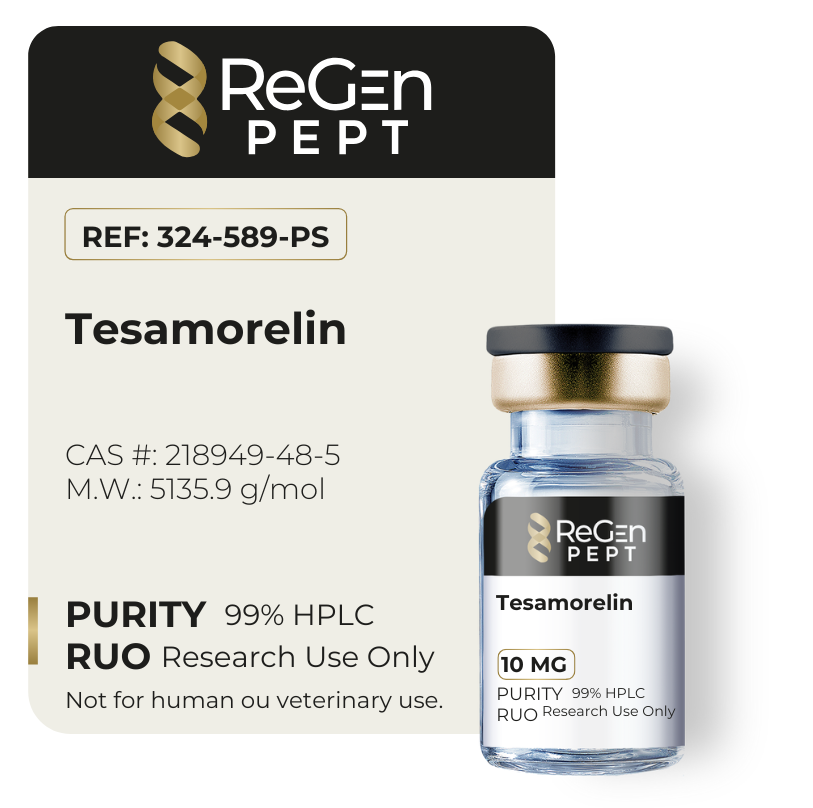
| Tesamorelin is a synthetic analog of growth hormone–releasing hormone (GHRH 1–44) engineered to stimulate endogenous growth hormone (GH) secretion. It is distinct among GHRH analogs once its demonstrated effects on visceral adipose tissue via GH-mediated pathways. |
| Mechanism of Action |
| |
| Tesamorelin binds to the GHRH receptor on pituitary somatotrophs, promoting: |
| |
• Increased cyclic AMP signaling and pulsatile GH release
• Elevated hepatic IGF-1 production
• Enhanced lipolysis, particularly within visceral adipose tissue
• Support of anabolic and metabolic processes |
| Biological and Clinical Effects |
| |
| Randomized clinical trials have demonstrated that tesamorelin significantly reduces visceral adipose tissue (VAT) and improves lipid parameters in specific patient populations. Improvements in body composition occur without sustained supraphysiologic GH exposure, supporting a physiologic mechanism of action. |
| Time of Use / Treatment Duration |
| |
| Clinical trials have evaluated tesamorelin over 26–52 weeks, demonstrating sustained reductions in visceral fat with continued therapy. Discontinuation is associated with gradual reversal of VAT reduction, indicating the need for ongoing treatment to maintain effect. |
| Safety, Tolerability, and Precautions |
| |
| Tesamorelin is generally well tolerated. Common adverse effects include injection-site reactions, arthralgia, and peripheral edema. Precautions include glucose intolerance, active malignancy, pregnancy, and disorders associated with abnormal GH or IGF-1 signaling. |
|
Detailed References
| Falutz J et al. (2007). Effects of tesamorelin, a growth hormone–releasing factor analog, on visceral fat in HIV-infected patients. Journal of Clinical Endocrinology & Metabolism, 92(9), 3431–3437. |
| |
| Stanley TL et al. (2014). Effects of tesamorelin on hepatic fat and insulin sensitivity in HIV. Diabetes, 63(5), 1713–1721. |
| |
| Koutkia P et al. (2010). Long-term effects of tesamorelin on body composition. Journal of Clinical Endocrinology & Metabolism, 95(8), 4291–4304. |
| |
| LaValle J. (2022). The Complete Guide to Peptides. Clinical context for GHRH analogs and metabolic applications. |
| |
|
|
|
Posology
Approved dosing for the treatment of HIV-associated lipodystrophy is 2 mg administered subcutaneously once daily.
In metabolic or body-composition contexts discussed in clinical practice, dosing should not exceed approved regimens and must be individualized by the prescribing physician.
Physician-directed individualization is essential.
|
|
Clinical Practice Framing
Tesamorelin occupies a unique position among GH secretagogues due to its regulatory approval and robust clinical trial data. In integrative and metabolic medicine, it is discussed as a targeted therapy for visceral adiposity rather than a generalized performance or anti-aging agent.
|
|


Reviews
There are no reviews yet.