| Scientific Overview |
| |
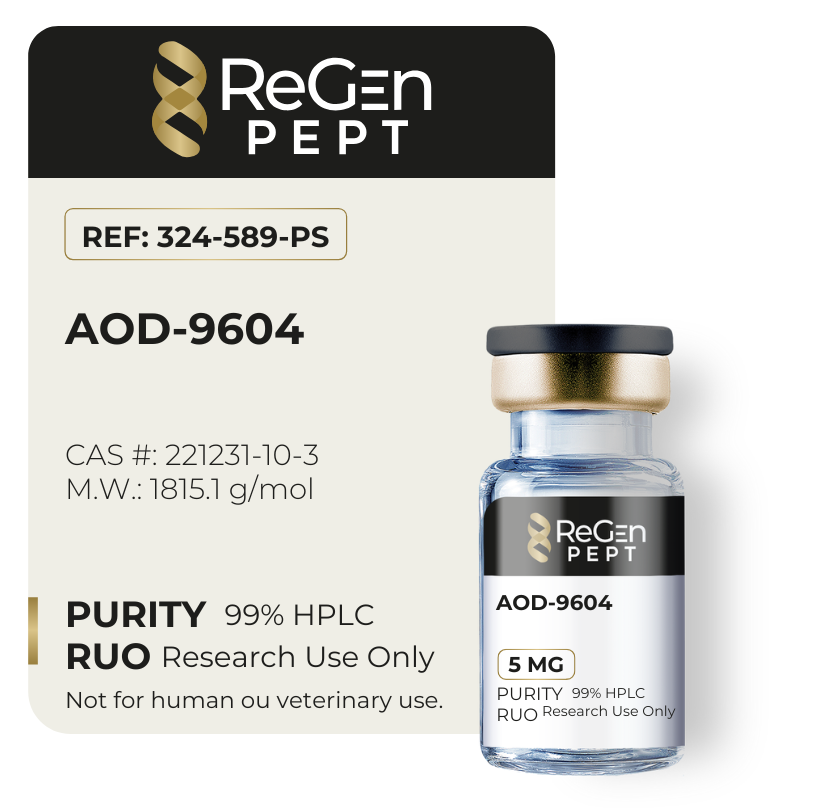
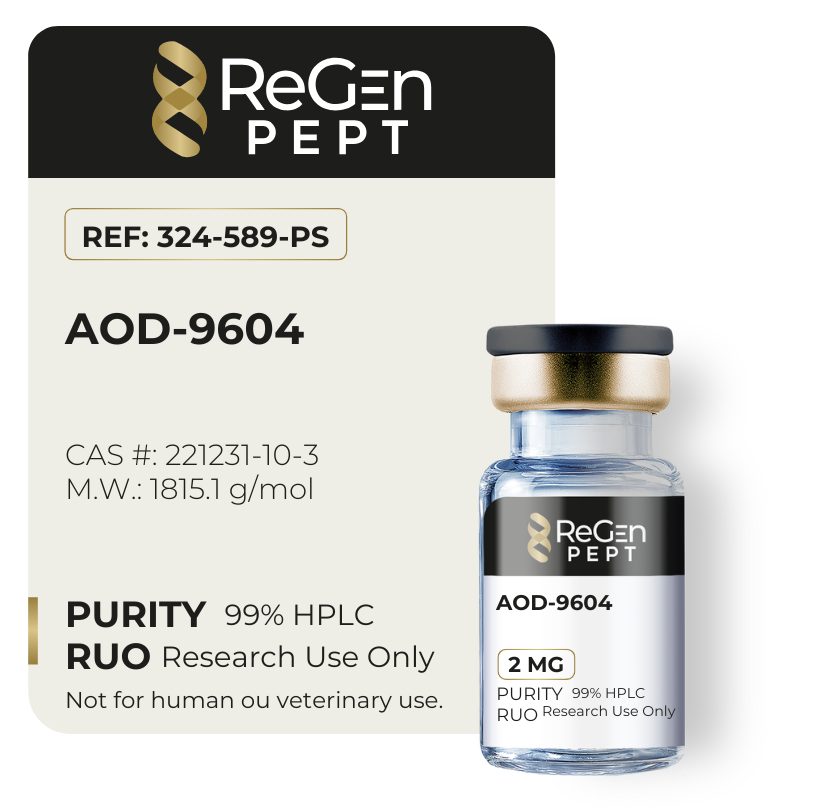
| AOD-9604 is a synthetic peptide corresponding to amino acids 176–191 of human growth hormone (hGH). It was developed to isolate the lipolytic and anti-lipogenic effects of hGH while avoiding its growth-promoting and diabetogenic actions. AOD-9604 has been investigated specifically for weight loss and fat reduction, making it one of the most targeted peptides in the fat-burning category. |
| Mechanism of Action |
| |
| AOD-9604 acts on adipose tissue by: |
| |
• Stimulating lipolysis (breakdown of stored triglycerides)
• Inhibiting lipogenesis (formation of new fat)
• Activating hormone-sensitive lipase pathways
• Acting independently of IGF-1 and without stimulation of GH receptors |
| |
| Importantly, AOD-9604 does not increase insulin resistance, does not elevate IGF-1, and does not promote linear growth, which differentiates it from full-length growth hormone. |
| Biological and Clinical Effects |
| |
| Preclinical studies demonstrated significant reductions in body fat without loss of lean mass. Human clinical trials evaluated AOD-9604 for obesity and showed reductions in abdominal fat and waist circumference in certain populations, with a favorable safety profile. |
| Time of Use / Treatment Duration |
| |
| Clinical trials and practice discussions commonly describe use over 8–12 weeks, with reassessment of body composition, waist circumference, and metabolic markers. Longer-term use lacks robust published data and is generally structured in cycles rather than continuous administration. |
| Safety, Tolerability, and Precautions |
| |
| AOD-9604 demonstrated an excellent safety profile in clinical trials, with adverse events similar to placebo. It does not affect blood glucose, insulin sensitivity, or IGF-1 levels. Precautionary exclusions include pregnancy and lactation, and cautious use is recommended in patients with complex endocrine disorders until more data are available. |
|
Detailed References
| Ng FM, et al. (2000). Growth hormone fragment 176–191 stimulates lipolysis and inhibits lipogenesis in human adipose tissue. Journal of Endocrinology, 167(1), 55–62. |
| |
| Ng FM, et al. (2001). The lipolytic domain of human growth hormone. Endocrinology, 142(7), 2859–2867. |
| |
| Heffernan M, et al. (2011). AOD-9604 for the treatment of obesity: a randomized, placebo-controlled trial. Obesity, 19(5), 1036–1043. |
| |
| Vickers M, et al. (2002). Safety and metabolic effects of AOD-9604 in humans. International Journal of Obesity. |
| |
| LaValle J. The Complete Guide to Peptides / Peptide Therapy. Clinical applications of fat-metabolism peptides. |
|
|
|
Posology (Clinical Practice–Oriented)
Important: The following reflects clinical practice discussions and published trial dosing.
Commonly discussed dosing ranges include:
• 250–500 mcg per day, administered subcutaneously
• Typically administered once daily, often in a fasted state
Dosing should be individualized and physician-directed, particularly in patients with metabolic disease.
|
|
Clinical Practice Framing for Nootropics & Focus
In weight-loss and metabolic practice, AOD-9604 is positioned as a fat-specific metabolic peptide rather than an appetite suppressant or stimulant. It is best suited for patients with stubborn adiposity, particularly central/abdominal fat, and is typically integrated with nutritional intervention, physical activity, and broader metabolic optimization.
|
|

Reviews
There are no reviews yet.