| Scientific Overview |
| |
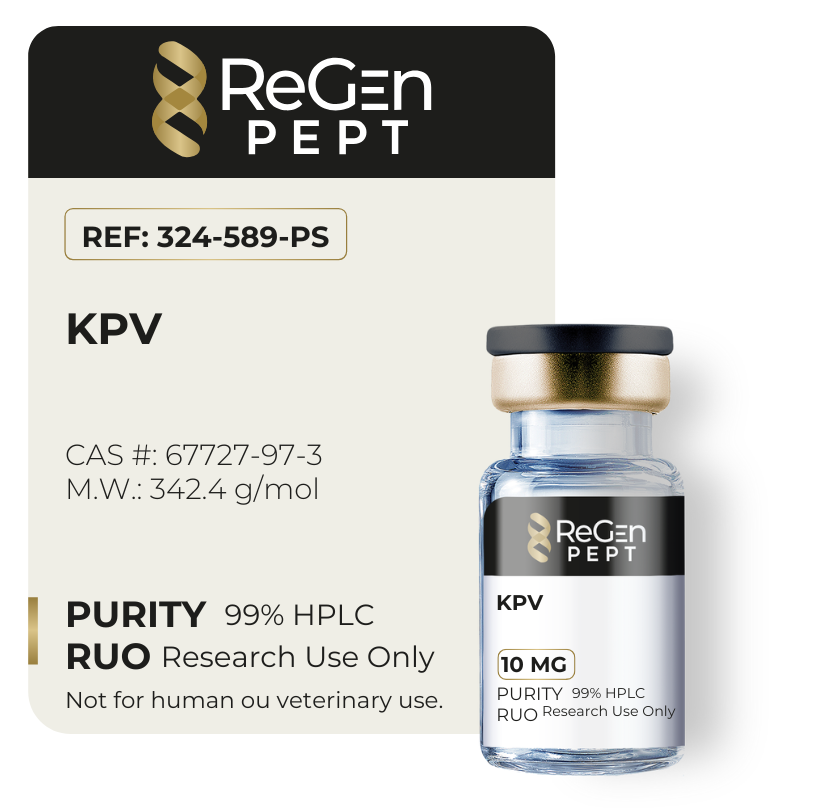
| KPV is a tripeptide fragment derived from the C-terminal sequence of alpha-melanocyte–stimulating hormone (α-MSH). It retains anti-inflammatory and immunomodulatory properties of α-MSH without melanocortin-mediated pigmentary effects. KPV has been studied primarily in preclinical and translational contexts for inflammatory bowel disease, mucosal inflammation, and skin inflammatory disorders. |
| Mechanism of Action |
| |
| KPV exerts anti-inflammatory effects through: |
| |
• Modulation of NF-κB signaling
• Reduction of pro-inflammatory cytokine release (TNF-α, IL-1β, IL-6)
• Preservation of epithelial barrier integrity
• Targeted anti-inflammatory profile without melanocortin receptor activation |
| |
| Unlike full-length α-MSH, KPV does not significantly activate melanocortin receptors responsible for pigmentation. |
| Biological and Clinical Effects |
| |
| Preclinical models demonstrate that KPV reduces intestinal inflammation, improves epithelial barrier function, and attenuates cytokine-driven tissue injury. In experimental colitis models, KPV has shown efficacy comparable to established anti-inflammatory therapies. Human clinical data remain limited, but mechanistic evidence supports potential applications in gastrointestinal, dermatologic, and mucosal inflammatory conditions. |
| Time of Use / Treatment Duration |
| |
| Clinical practice discussions typically describe KPV use in cycles of 4–8 weeks, particularly in inflammatory or gut-healing protocols. Duration is individualized based on symptom response and tolerability. |
| Safety, Tolerability, and Precautions |
| |
| Available preclinical and limited human experience suggest a favorable tolerability profile. Conservative precautions include avoidance during pregnancy and lactation and careful use in patients with complex immune conditions. No pigmentary or hormonal effects have been reported in association with KPV. |
|
Detailed References
| Getting SJ et al. (1999). Alpha-MSH and its tripeptide KPV inhibit NF-κB activation and proinflammatory cytokine release. Journal of Immunology, 162(12), 7446–7453. |
| |
| Rajora N et al. (1997). Anti-inflammatory effects of alpha-MSH peptides in experimental colitis. Journal of Immunology, 159(12), 6284–6291. |
| |
| Catania A et al. (2010). Melanocortin peptides in anti-inflammatory and protective pathways. Pharmacological Reviews, 62(1), 1–48. |
| |
| LaValle J. The Complete Guide to Peptides. Clinical applications of anti-inflammatory and gut-support peptides. |
| |
|
|
|
Posology (Clinical Practice–Oriented)
In peptide-therapy practice literature, oral dosing ranges of 250–1000 mcg per day are commonly discussed for gastrointestinal indications.
Topical formulations are described for dermatologic use, while injectable routes are less commonly emphasized.
All use must be physician-directed.
|
|
Clinical Practice Framing
In integrative and functional medicine contexts, KPV is positioned as a targeted anti-inflammatory peptide supporting mucosal and epithelial health. KPV is typically integrated with dietary, microbiome, and lifestyle interventions rather than used as stand-alone therapy.
|
|

Reviews
There are no reviews yet.