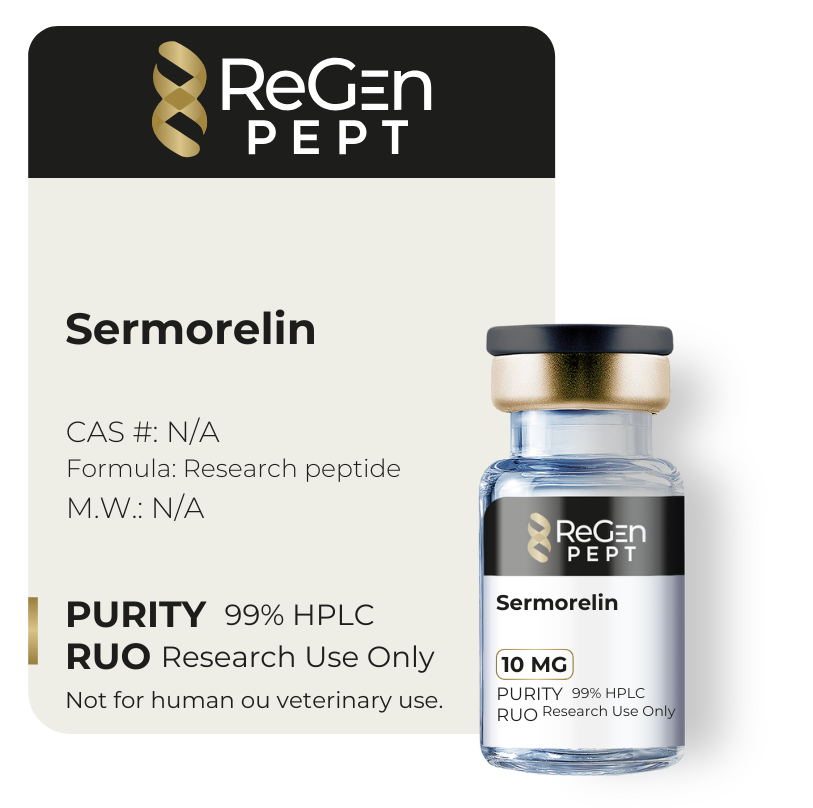
Sermorelin

CAS (Pre-validation): N/A

Chemical Formula (Pre-validation): Research peptide

Molecular Weight (Pre-validation): N/A
- +
Sermorelin
Scientific Overview, Mechanism, Clinical Use and Evidence
 
Scientific Overview
 
Sermorelin is a synthetic GHRH (1–29) analog that stimulates physiologic growth hormone secretion. Unlike exogenous GH therapy, it supports endogenous pulsatile release, maintaining feedback regulation of the hypothalamic-pituitary axis. In peptide-based hormone optimization frameworks, Sermorelin is positioned as a regulatory modulator of the GH–IGF-1 axis.
Mechanism of Action
 
Sermorelin binds to pituitary GHRH receptors, promoting:
 
  Pulsatile GH release
  Increased hepatic IGF-1 production
  Enhanced protein synthesis
  Improved lipolysis and metabolic balance
Biological and Clinical Effects
 
Clinical findings show elevation of GH and IGF-1 levels, improvements in body composition markers, and preservation of pituitary integrity. Functional medicine perspectives emphasize its role in restoring physiologic signaling rather than replacing hormones.
Time of Use / Treatment Duration
 
Initial evaluation period: 3–6 months. Long-term endocrine modulation protocols may extend 6–12 months. Periodic reassessment of IGF-1 every 8–12 weeks recommended. Continuous indefinite use should be clinically justified.
Safety, Tolerability, and Precautions
 
Potential effects include injection site reactions, headache, and flushing. Contraindicated in active malignancy and uncontrolled endocrine disorders.
Detailed References
Thorner MO, et al. (1986). Growth hormone-releasing hormone stimulates growth hormone secretion in man. Journal of Clinical Investigation, 78(1):55–60.
 
FDA. Sermorelin acetate historical approval information (Geref®).
 
Biller BMK, et al. (2000). Growth hormone-releasing hormone analog therapy in adults with GH deficiency. Journal of Clinical Endocrinology & Metabolism, 85(9):3453–3460.
 
Vance ML. (1990). The role of growth hormone-releasing hormone in physiology and therapy. Endocrine Reviews, 11(3):353–377.
 
LaValle J. The Complete Guide to Peptides. GH axis modulation, endocrine resilience, and physiologic hormone signaling.
 
Sermorelin
Posology (Clinical Practice–Oriented)
Common adult dosing regimens:
  0.2 mg – 0.5 mg subcutaneously at bedtime
  Once daily, 5–7 days per week
Dosing may be adjusted based on:
  IGF-1 level
  Clinical symptoms
  Age and body composition
Pediatric GH deficiency dosing follows approved labeling.
Clinical Practice Framing
Sermorelin is best framed as a physiologic endocrine modulator, integrated with sleep optimization, resistance training, and metabolic health strategies.
The peptides described in this material are intended strictly for research purposes only. They are not approved for human or veterinary use, clinical application, diagnosis, treatment, or prevention of any disease.
Any research involving these compounds must be conducted in compliance with applicable laws and regulations in the country where the research is performed, including prior approval by a duly constituted Ethics Committee or Institutional Review Board (IRB), where required.
RegenPept acts solely as a supplier of research-grade materials and assumes no responsibility or liability for the design, conduct, regulatory compliance, interpretation, or outcomes of any research involving these products.
Any dosage, administration protocols, or related information contained in this material are derived from publicly available scientific literature and are provided strictly for informational purposes. Such information does not constitute medical advice, therapeutic recommendation, or endorsement of any specific use by RegenPept.
Dosage

10 mg, 5 mg

Quantity

10 vials, unit

Reviews

There are no reviews yet.

Be the first to review “Sermorelin”

Your email address will not be published. Required fields are marked *

plugins premium WordPress
Scroll to Top