|
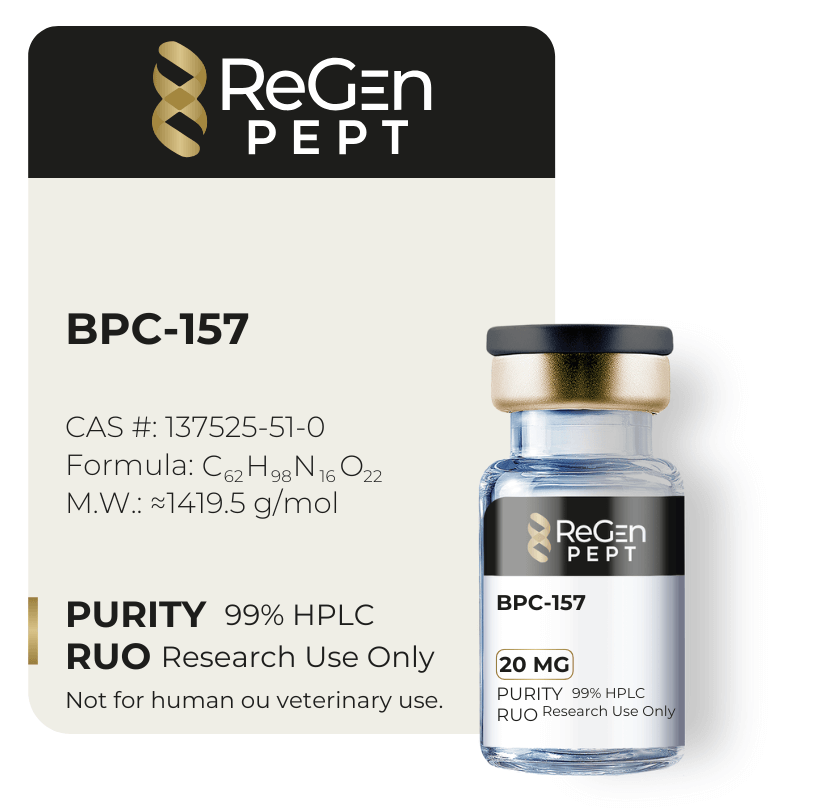
BPC-157 (Body Protection Compound 157)
|
|
Scientific Overview, Mechanism, Clinical Use and Evidence
|
|
|
| Scientific Overview |
| |
| BPC-157 is a synthetic pentadecapeptide (15 amino acids) originally described as a stable fragment derived from a protective protein found in gastric juice. It has been studied primarily in preclinical models for gastrointestinal cytoprotection and for broader effects on tissue repair (tendon, ligament, muscle), angiogenesis, and modulation of inflammation. |
| Mechanism of Action |
| |
| Across preclinical studies, BPC-157 has been associated with pro-repair signaling that includes promotion of angiogenesis, support of fibroblast activity and collagen organization, cytoprotective effects, and anti-inflammatory actions. In tendon and connective-tissue contexts, BPC-157 has been shown to accelerate tendon outgrowth and fibroblast activity in experimental models, consistent with regenerative remodeling. |
| Biological and Clinical Effects |
| |
| Preclinical literature reports accelerated healing of soft tissues (tendon/ligament/muscle) and protective effects in gastrointestinal injury models. In the clinical literature, BPC-157 (PL-14736) has been evaluated in phase 2 studies for ulcerative colitis, supporting the concept of human translational use in GI disease. |
| Time of Use / Treatment Duration |
| |
| Cycle-based use is frequently described in peptide practice materials. A common structure for recovery/healing-focused protocols is 6–8 weeks, followed by a rest period (often 2–4 weeks) before repeating if needed. |
| |
| Long-term continuous use lacks robust controlled safety and outcomes data and should be avoided outside monitored clinical research. |
| Safety, Tolerability, and Precautions |
| |
| Available data suggest a generally favorable tolerability profile in preclinical studies, including published multi-species preclinical safety evaluations. Nonetheless, because high-quality long-term human data are limited, conservative precautions are appropriate. |
| |
| These typically include avoidance in pregnancy and lactation, caution in patients with active or recent malignancy (precautionary principle with pro-repair signaling), and careful monitoring in complex endocrine/metabolic disease. |
|
Detailed References
| Vasireddi N, et al. (2025). Emerging Use of BPC-157 in Orthopaedic Sports Medicine. (Review). PubMed Central. |
| |
| Sikiric P, et al. (2012). Stable gastric pentadecapeptide BPC 157. (Review; includes clinical context for PL-14736 in IBD). PubMed. |
| |
| Xu C, et al. (2020). Preclinical safety evaluation of body protective compound (BPC) 157. PubMed. |
| |
| Klicek R, et al. (2008). Pentadecapeptide BPC 157, in Clinical Trials as a Therapy for Ulcerative Colitis (PL 14736). Journal of Pharmacological Sciences. |
| |
| Chang C-H, et al. (2011). Promoting effect of pentadecapeptide BPC 157 on tendon healing and fibroblast activity. Journal of Applied Physiology. |
| |
| Hack Smith. (2025). The Complete Guide to Peptides: Unlocking the Secrets to Health, Healing, and Longevity. (Practical dosing/cycling examples). |
| |
| LaValle J. The Complete Guide to Peptides / Peptide Therapy. (Clinical-functional medicine framing for regenerative peptide protocols). |
|
|
|
Posology (Clinical Practice–Oriented)
Common clinical practice ranges described in peptide-therapy practice guides include 250–500 mcg per day via subcutaneous injection, sometimes split into two daily doses, typically used for 4–8 weeks.
Oral capsule protocols are also described for gastrointestinal goals (e.g., 500 mcg capsules 1–2 times daily), though clinical evidence for oral use varies by indication and formulation.
|
|
Clinical Practice Framing
In clinical practice framing, BPC-157 is best positioned as a regenerative-support peptide considered in integrative or sports-medicine settings as an adjunct to structured rehabilitation and foundational care (sleep, nutrition, progressive loading, and physical therapy).
Consistent with functional medicine frameworks, protocols should prioritize patient selection, informed consent, measurable endpoints (pain/function, ROM, return-to-activity), and conservative cycling rather than indefinite use.
|
|
|
|
| The peptides described in this material are intended strictly for research purposes only. They are not approved for human or veterinary use, clinical application, diagnosis, treatment, or prevention of any disease. |
| Any research involving these compounds must be conducted in compliance with applicable laws and regulations in the country where the research is performed, including prior approval by a duly constituted Ethics Committee or Institutional Review Board (IRB), where required. |
| RegenPept acts solely as a supplier of research-grade materials and assumes no responsibility or liability for the design, conduct, regulatory compliance, interpretation, or outcomes of any research involving these products. |
| Any dosage, administration protocols, or related information contained in this material are derived from publicly available scientific literature and are provided strictly for informational purposes. Such information does not constitute medical advice, therapeutic recommendation, or endorsement of any specific use by RegenPept. |
|

Reviews
There are no reviews yet.